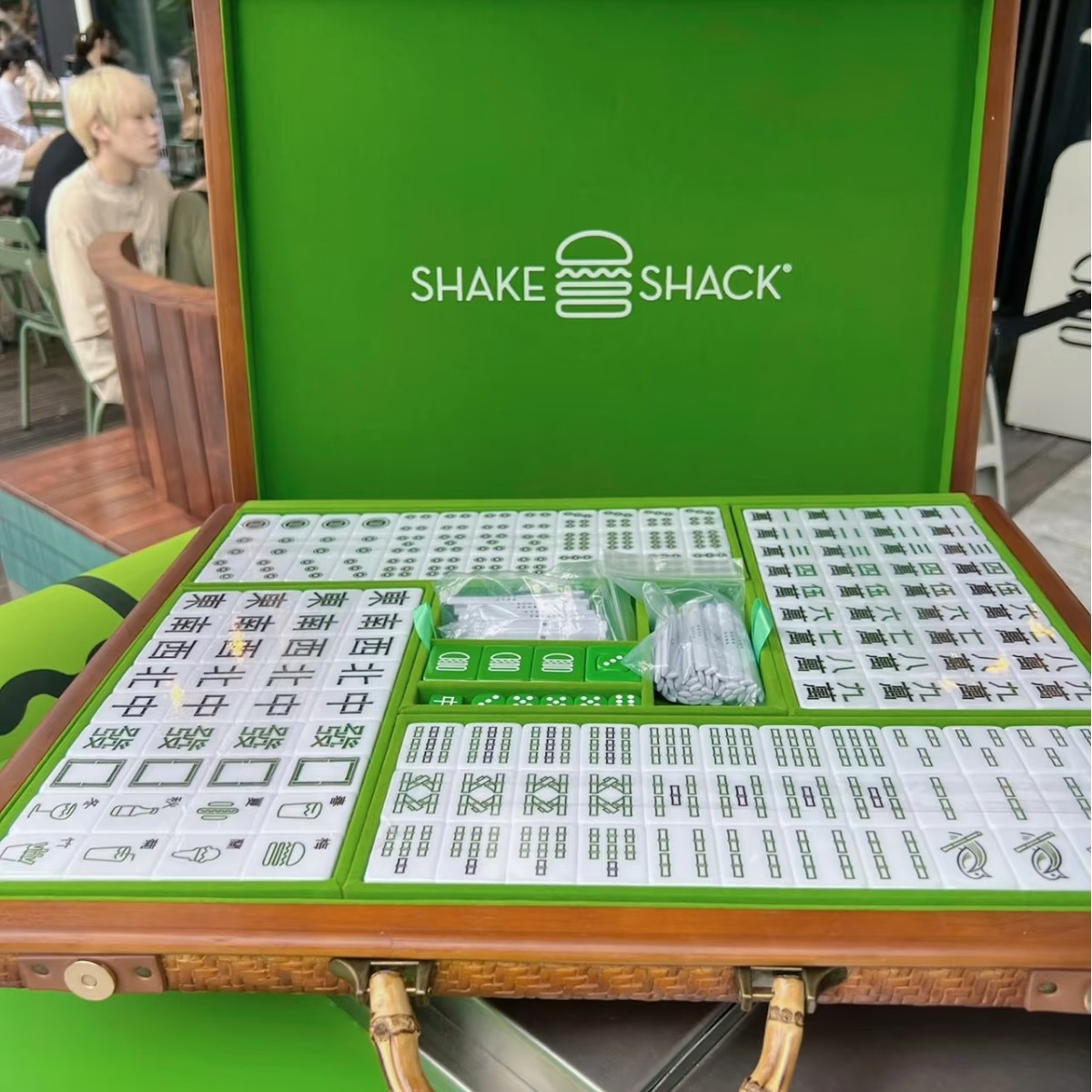
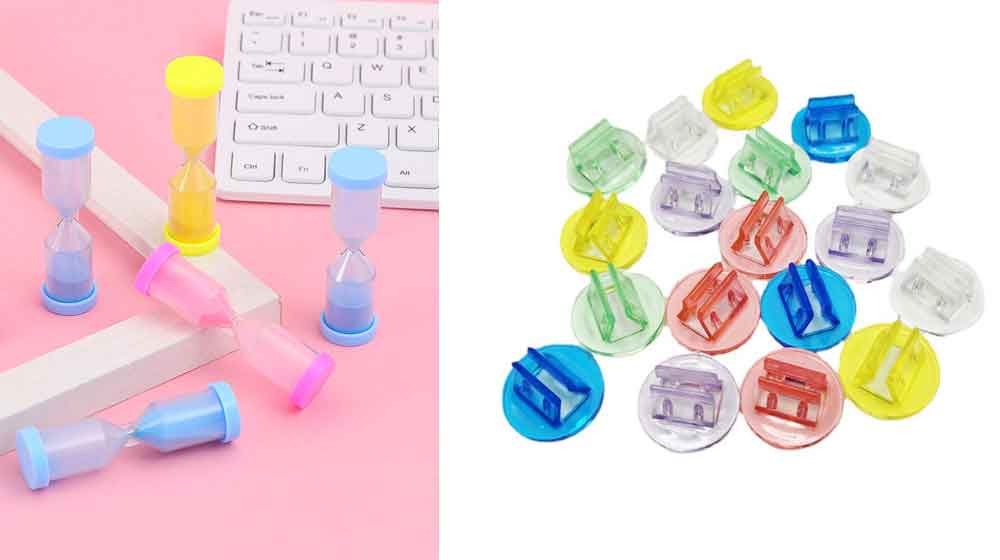
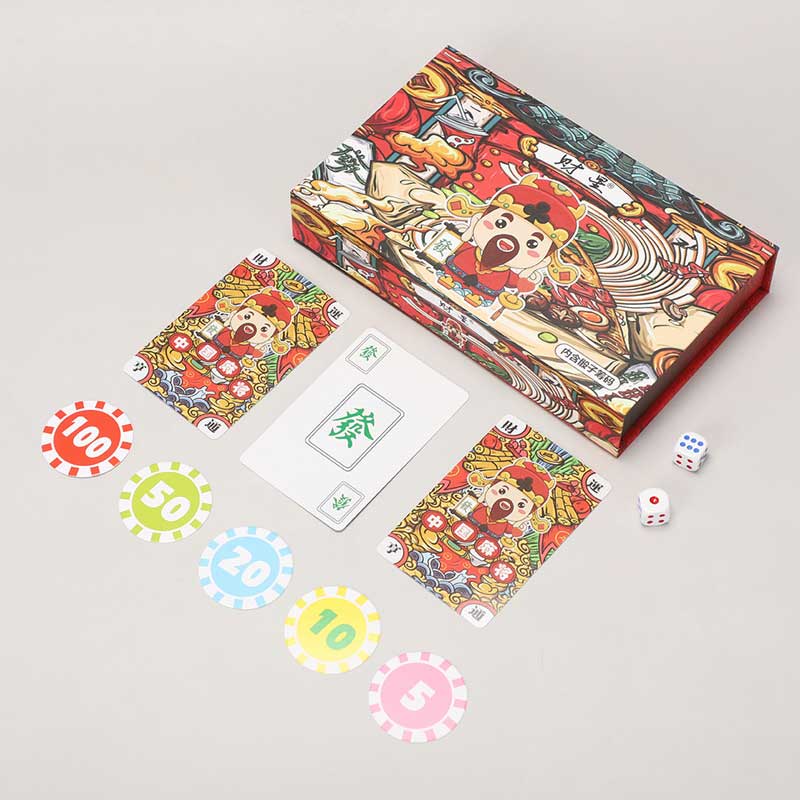
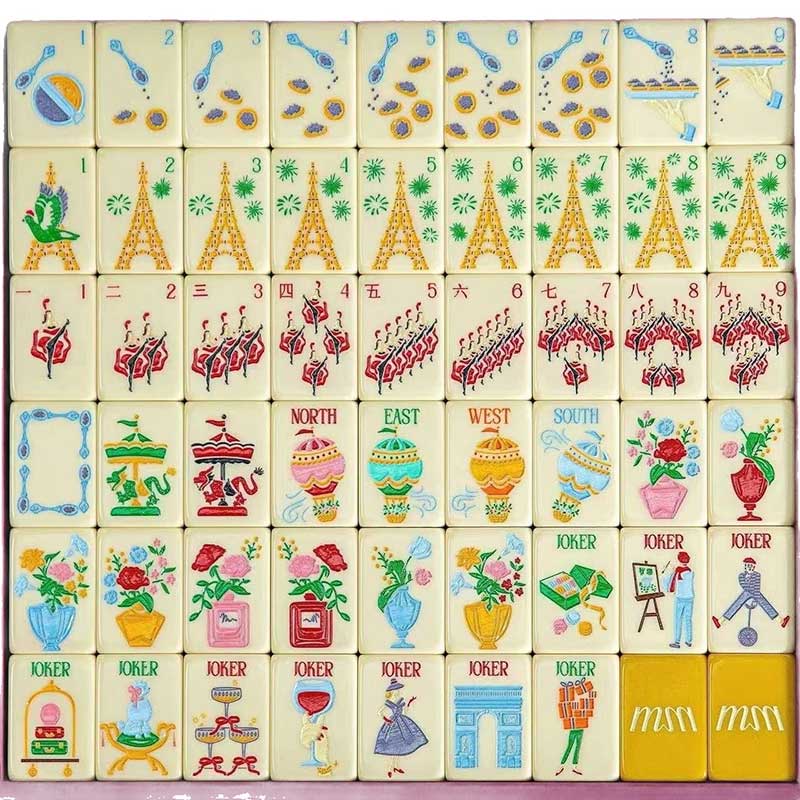
There is no single universal mahjong tile size. Common planning sizes range from compact tiles around 30 mm tall to larger tiles around 36 mm tall.
| Planning size | Dimensions in mm | Approx. dimensions in inches | Best suited for |
|---|---|---|---|
| Compact | 30 × 23 × 13 mm | 1.18 × 0.91 × 0.51 in | Travel-oriented or compact sets |
| Mid-size | 32 × 23 × 13 mm | 1.26 × 0.91 × 0.51 in | Many standard-format sets |
| Large | 36 × 25 × 15 mm | 1.42 × 0.98 × 0.59 in | Larger-format sets and bold artwork |
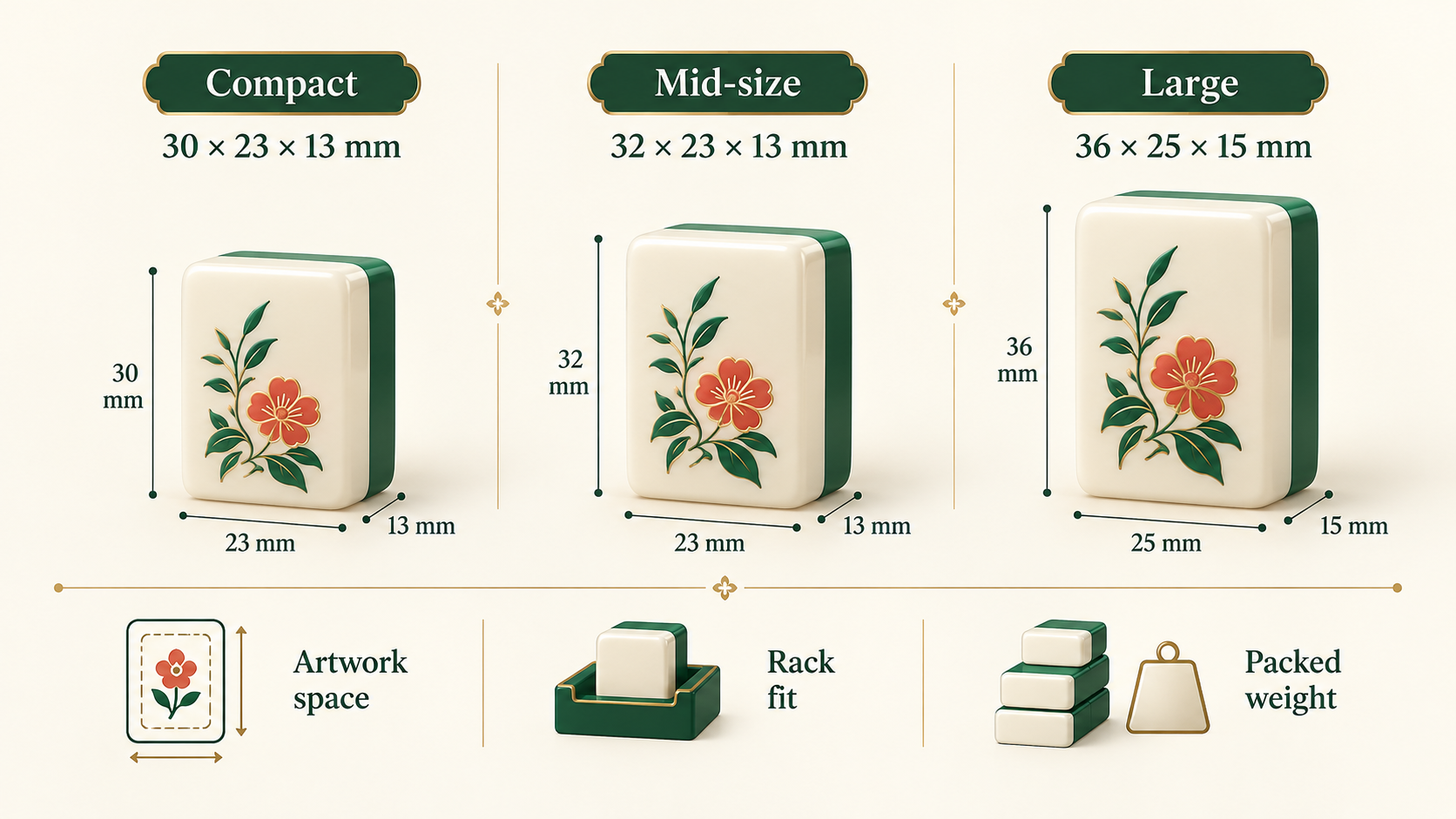
These are useful starting points, not fixed rules. The final size should be confirmed against the intended rack, case, tile count, artwork layout and physical sample.
A difference of only a few millimeters can change the entire product experience.
Larger tile faces provide more room for numbers, symbols, color registration and custom illustrations. If your design includes fine lines, several colors, brand elements or larger indexes for easier reading, start by testing the artwork at actual production size.
A design that looks clear on a computer screen may feel crowded when printed on a 23 mm-wide tile.
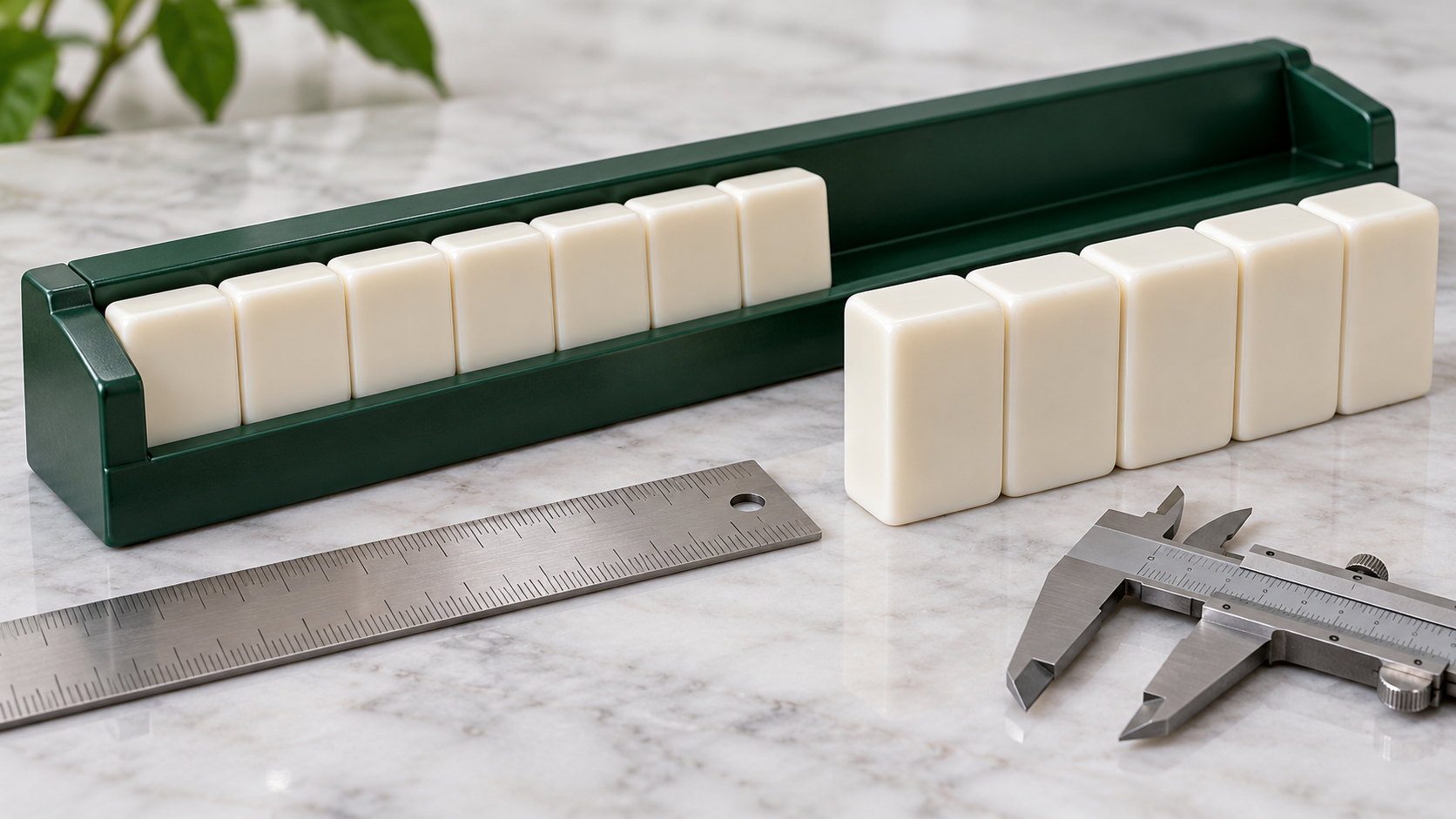
Tile width and thickness directly affect whether a set fits the intended racks and pushers. Do not approve dimensions based only on the overall rack length. Measure:
If you are creating matching custom racks, tiles and racks should be developed as one system and tested together.
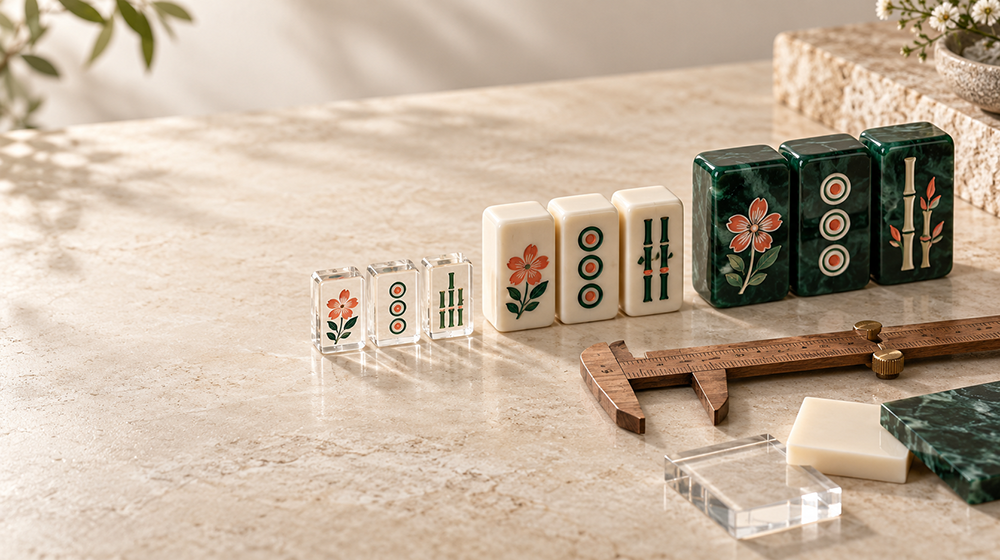
Larger tiles generally create a heavier, more substantial hand feel, but they can also increase packed weight and freight costs. The material matters too: acrylic, melamine, resin and layered constructions can feel noticeably different even at similar dimensions.
For a wholesale project, ask for the measured weight of the approved sample and the estimated packed-set and carton weight before finalizing shipping.
A tile may fit the rack but still be unsuitable for the selected case, tray or retail box. Confirm interior dimensions, dividers, foam cutouts and accessory space after the tile size and tile count are approved.
Compact tiles can work well for travel-friendly sets, smaller storage cases or projects where lower weight is important. They leave less room for detailed artwork, so they are best paired with clean, high-contrast graphics and carefully selected typography.
Use compact tiles when the project priorities are portability, efficient packaging and compatibility with a compact accessory system.
A mid-size format adds face height while retaining a relatively compact width and thickness. This can be a practical balance for brands that want more visual space without moving to a large-format set.
It is still important to test the exact rack fit, case fit and artwork proof. A “32 mm” label alone does not describe the full tile specification.
Large tiles offer more visible artwork area and a more substantial playing feel. They can be a strong option for premium gift sets, lifestyle collections and projects using bold custom graphics.
Because large tiles are wider and thicker, they should be planned with compatible racks, packaging and freight weight in mind. Sampling is especially important before production.
When requesting a quote, specify all three dimensions:
Tile height × tile width × tile thickness
For example:
32 × 23 × 13 mm
Also include:
This information allows the factory to quote a realistic sample plan and production solution rather than estimating from a size name alone.
American mahjong sets often require a specific tile count and may include jokers, blanks, racks, pushers, score cards and additional accessories. Tile dimensions should therefore be chosen alongside the complete set configuration.
Before ordering a custom American mahjong set, confirm:
[Internal link: Custom American Mahjong Tile Sets]
Tile size and artwork should be approved together. A detailed illustration, thin lettering or multi-color symbol may need a larger printable area than a simple traditional design.
For the best production result, provide editable vector artwork whenever possible. Your proof should show:
LYNgames recommends approving a physical production-representative sample whenever the project includes custom illustrations, fine details, premium finishes or new accessory tooling.
Tile size is only one part of the specification. The material changes the appearance, weight, durability and production process.
| Material option | Typical strengths | Consider before choosing |
|---|---|---|
| Melamine | Durable, practical and cost-conscious | Confirm available colors and decoration method |
| Acrylic | Clear, colorful and premium-looking | Confirm scratch resistance, edge finish and packaging protection |
| Resin | Flexible for distinctive colors and effects | Confirm finish consistency and sample approval |
| Layered construction | Can create a premium multi-color look | Confirm total thickness, bonding quality and edge appearance |
The best option depends on the desired retail position, artwork, quantity and target price. The approved sample—not a screen render—should define the final appearance.
[Internal link: Custom Mahjong Tiles Manufacturer]
Use this checklist before moving from concept to sampling:
A successful custom mahjong tile project begins with a complete brief—not just a reference photo. Share your preferred tile size, material, artwork status, set configuration, quantity and destination. Our team can help you evaluate practical options for tiles, racks, packaging and accessories before sampling.
[CTA: Start Your Custom Mahjong Tile Project]
There is no single worldwide standard. Compact, mid-size and large formats are all used. For custom production, specify the complete height, width and thickness in millimeters instead of relying on a size label only.
Usually, yes. Larger tile faces provide more room for artwork, indexes and color contrast. However, the best size also depends on the rack, case, player preference and product positioning.
Not always. Measure the usable rack rail length, channel width, depth and end clearance. Confirm compatibility using the actual rack and a physical tile sample.
Start with your target accessories and intended audience. A mid-size format can balance readability and compact storage, while a larger format may better suit premium artwork-led sets. Confirm the final dimensions through a sample.
Yes. Share the required dimensions, material, artwork, tile count, accessory requirements and quantity. The final production size should be approved through drawings and samples before bulk manufacturing.